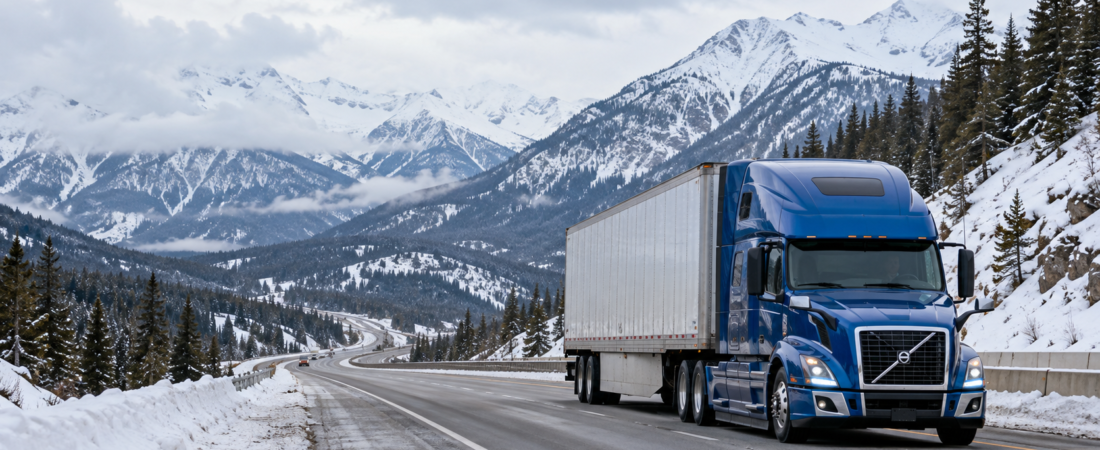
A hill does not wait until the truck feels weak before it starts taking away your options. It begins by pulling down road speed and engine RPM. If you wait until the truck is already struggling, the downshift becomes harder, the recovery takes more throttle, and the climb costs more fuel and momentum.
THE DECISION STARTS BEFORE THE TRUCK FALLS BEHIND
There is no universal RPM number that fits every truck. Engine rating, transmission, load, axle ratio, grade, wind, and company programming all matter. The useful habit is to watch the rate of speed loss and the engine response. When the truck begins giving up momentum faster than the grade allows, it is time to make an early decision.
A timely downshift keeps the engine in a working range where it can carry the load. A late downshift leaves you trying to repair a situation that was easier to protect a few seconds earlier.
WHAT A LATE DOWNSHIFT LOOKS LIKE
Many drivers hold the higher gear because they do not want to lose speed. RPM falls, throttle goes deeper, and the truck starts working below the range where it responds cleanly. Then the grade wins more momentum, the transmission may hunt, and the driver needs a stronger correction.
This is not about chasing a “magic gear.” It is about recognizing when the current gear is no longer protecting the truck’s working range. The right move depends on your specific vehicle, load, road conditions, company policy, and the manufacturer’s instructions.
A BETTER HILL-CLIMB ROUTINE
Read the grade early. Know whether the hill is short, long, or tightening after the first rise. Build lawful momentum before the climb where conditions allow. Watch RPM and road speed together. If the truck begins losing speed too quickly, select the appropriate gear or mode before the situation becomes a recovery.
For automated transmissions, this may mean using the approved mode or gear-hold function before the transmission is forced to react to lost momentum. For manual transmissions, it means making the shift while road speed and engine response still leave room for a clean match.
The purpose is not to hold a perfect speed on every hill. A heavy truck will slow on grades. The goal is to make that slowdown controlled, predictable, and within the truck’s useful working range.
DRIVE THE TRUCK YOU HAVE
Always follow your vehicle manual, fleet rules, local laws, load limits, and road conditions. Smart driving does not replace required training or safety procedures. It helps you make earlier, calmer decisions with the information the truck is already giving you.
The Smart Truck Driving System teaches practical ways to read torque, RPM, grade, transmission behavior, fuel use, and truck health before a normal climb turns into a costly recovery. Learn more about the training and decide whether it fits your operation.