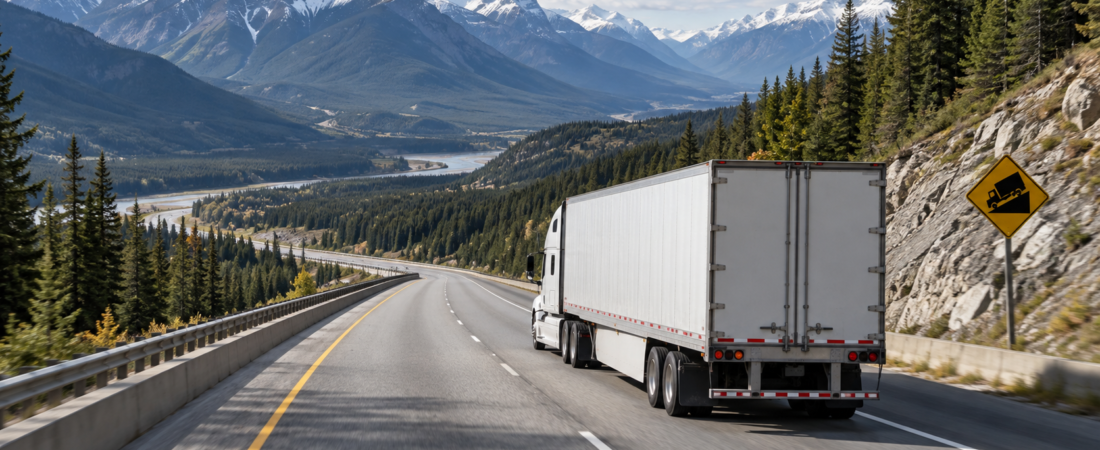
The bottom of a long descent is largely decided at the top. If the truck starts down too fast or in too high a gear, the driver may end up using service brakes to repair a decision that should have been made before the grade.
SET THE TRUCK UP BEFORE THE DESCENT
Choose an appropriate speed for the load, grade, weather, curve radius, traffic, and vehicle instructions before starting down. Select the appropriate gear early, then use engine braking only when it is safe, legal, and permitted by the vehicle and company policy.
There is no single safe downhill speed or gear. A setting that works for one truck, load, and road may be wrong for another. The point is to start with a plan and leave room for the truck to remain controlled.
DO NOT MAKE THE SERVICE BRAKES YOUR PLAN
Service brakes are essential, but prolonged or repeated hard use on a long downgrade creates heat and reduces the margin available when you truly need braking. If the truck requires frequent braking just to stay near target speed, that is a warning that entry speed, gear choice, engine braking, load, or conditions need reconsideration.
Road surface matters. Rain, ice, loose material, curves, and restricted engine-brake rules can change the entire approach. Maintain appropriate following distance and obey all signs, laws, and company procedures.
Professional downhill driving is not about bravado. It is about preparation: appropriate speed, correct gear, appropriate braking strategy, and constant attention to how the truck responds. The Smart Truck Driving System helps drivers develop practical descent plans without replacing required training, vehicle manuals, or the law.