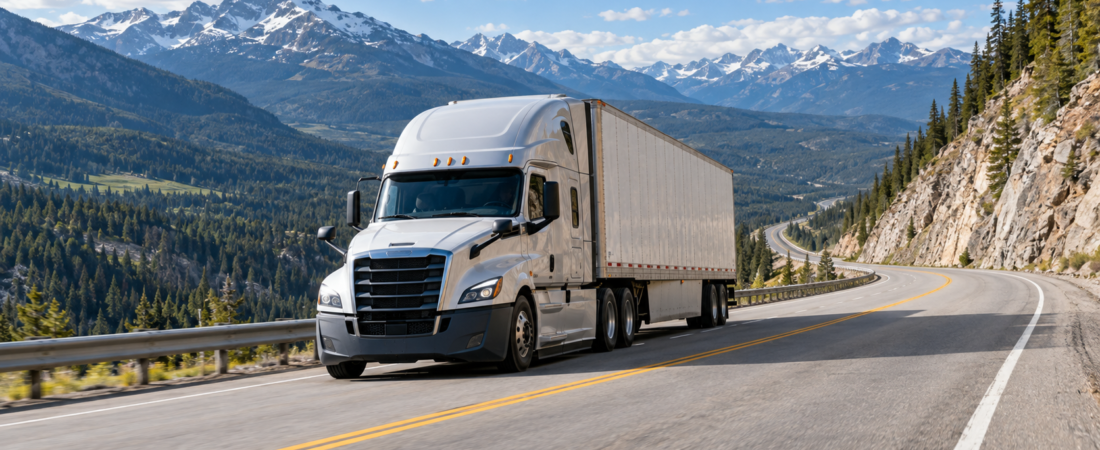
Momentum is not extra speed for its own sake. On a grade, it is the road speed and engine response you carry into the climb before the hill starts taking it away. When a truck enters a hill with no plan, every second of waiting can turn a normal pull into a recovery.
READ THE GRADE BEFORE THE TRUCK STRUGGLES
Look beyond the first rise. A short overpass, a long mountain pull, a tightening grade, wind, traffic, and load weight do not ask the truck for the same response. The best decision is usually made while the truck still has options, not after speed and RPM have already collapsed.
Watch road speed and RPM together. If speed loss begins accelerating and the engine response is fading, the current setup may no longer be protecting momentum. The truck is giving you information. Read it early.
PROTECT, DO NOT CHASE
The goal is not to force a loaded truck to hold the same speed on every climb. The goal is to keep the slowdown controlled and the engine operating in an appropriate range for your equipment. More throttle in the wrong gear may only add fuel and heat while the truck continues losing ground.
For a manual truck, that can mean planning a clean downshift before road speed disappears. For an automated transmission, it can mean using an approved mode or gear-hold function before the system is forced to react to damage already done.
Build legal momentum where conditions allow, choose the appropriate gear or mode early, and accept a controlled reduction in speed when the load and grade require it. Follow the vehicle manual, fleet rules, posted limits, and road conditions.
The Smart Truck Driving System helps professional drivers read grade, RPM, torque, transmission behavior, and fuel use before a climb becomes a costly recovery.