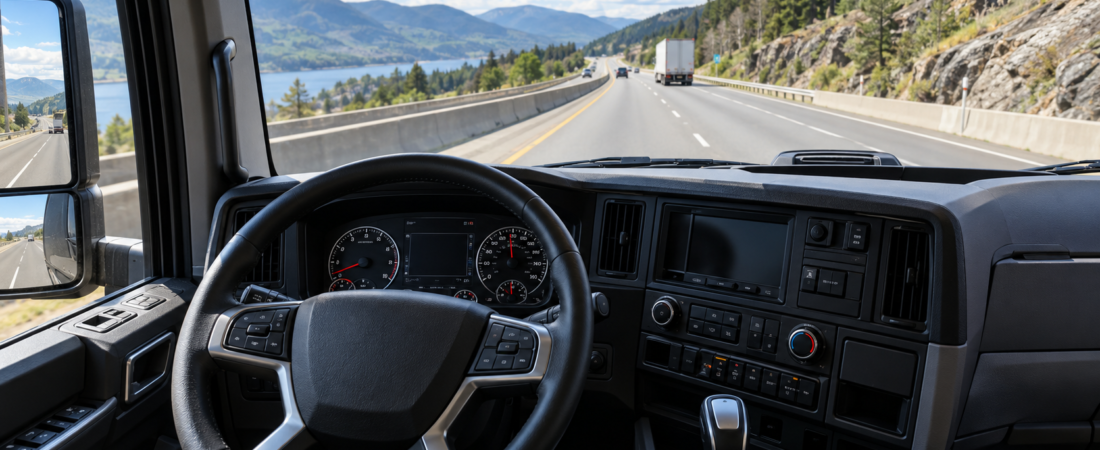
An automated transmission is designed to shift, but it cannot read the road ahead the way a professional driver can. When the truck reaches a hill already losing speed, the system sees lower RPM, heavier throttle, and less road speed. It may start searching for a gear after momentum is gone.
WHAT GEAR HUNTING TELLS YOU
Repeated shifting on a grade is often a signal that the transmission is trying to correct a situation late. The truck may upshift for economy, lose pull under load, downshift, then repeat. That wastes attention and can make the climb feel less controlled.
This does not mean the transmission is “bad,” and it does not mean there is one manual setting that fits every truck. Transmission programming, engine power, load, axle ratio, terrain, and fleet policy all matter.
LEAD THE DECISION EARLY
Read the grade before the truck starts struggling. If your manufacturer-approved controls provide a mode, manual selection, or gear hold that suits the condition, use it according to the vehicle manual and company policy. The purpose is not to fight the transmission. It is to give the system a clearer operating plan before it is forced to react.
Watch the truck’s response. If it is losing speed rapidly, hunting between gears, or working below an effective range, make a calmer decision earlier next time. A controlled shift before momentum is gone is usually cleaner than a desperate correction after the climb has already taken speed away.
The Smart Truck Driving System teaches practical strategies for working with both manual and automated transmissions on real North American roads.