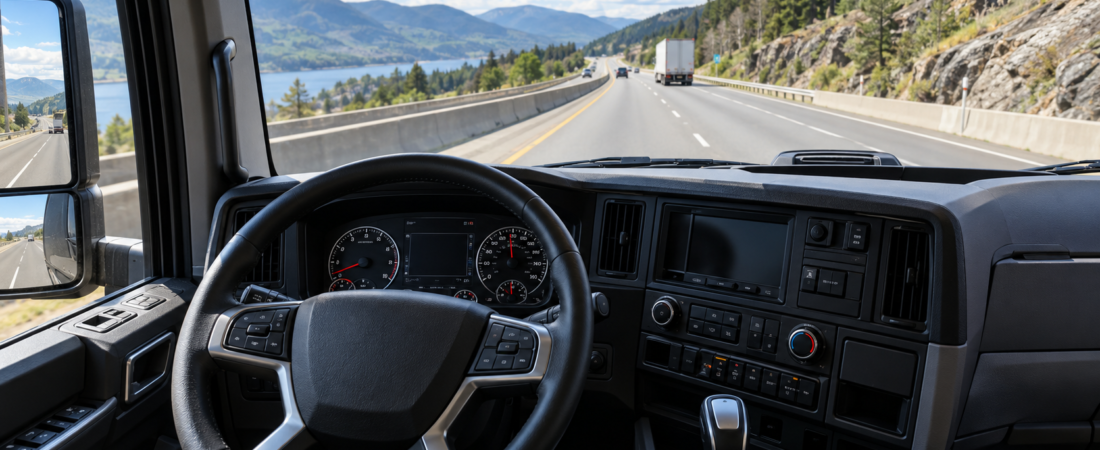
Cruise control can help maintain a steady pace on open, predictable highway. It is not a substitute for reading grade, weather, traffic, wind, or the way a loaded truck is responding.
ON HILLS, THE TRUCK MAY NEED A DRIVER’S DECISION
A climb can ask for more torque, a different gear, or a temporary change in speed. A descent can require an appropriate entry speed, gear selection, and engine-braking plan. If cruise control is allowed by your company and vehicle instructions, understand what the system is doing instead of assuming it will make every decision at the right moment.
On some trucks, cruise and transmission programming may wait until speed has changed before reacting. That may be acceptable on a mild grade, but a longer or steeper hill can leave less room for a clean response. Conditions vary by vehicle, load, road, and programming.
USE IT AS A TOOL, NOT A PLAN
Rain, curves, work zones, traffic, wind, changing grades, and heavy loads all require active attention. If the system is creating unwanted shifts, building speed downhill, or reacting later than the road requires, take control using only approved controls and according to the manual.
The goal is not to avoid cruise control. The goal is to know when it helps and when professional judgment must lead. The Smart Truck Driving System teaches drivers how to read truck response before ordinary road conditions turn into a costly recovery.